Journals
-
Interprofessional Collaboration on Global Challanges of Communicable Diseas

Converence Overview
Indonesia faces several infectious diseases including malaria, tuberculosis, and influenza. From 1990 – to 2019 Indonesia experienced a decrease in the burden of infectious diseases in several provinces in Indonesia, progress towards malaria elimination has been achieved in the western part of Indonesia but stagnant in Papua Province as many as 81% of malaria cases come from 8 regencies and cities in Papua including Jayapura City, Jayapura Regency , Keerom Regency, Mimika Regency, Sarmi Regency, Mamberamo Raya Regency, Asmat Regency, Kabupaten Boven digoel and Yapen Regency, as well as other infectious diseases such as HIV AIDS, and tuberculosis significant health problems in Papua Province.
Interprofessional collaboration plays a crucial role in addressing communicable diseases by bringing together professionals from different disciplines to work towards common goals. This approach has been shown to improve patient outcomes, reduce healthcare-associated infections, and enhance the effectiveness of healthcare delivery. In conclusion, interprofessional collaboration is a valuable approach to addressing communicable diseases, as it fosters effective communication, teamwork, and collaborative care, ultimately leading to improved health outcomes. Based on the description above, Health Polytechic Jayapura's initiative to organize an International Seminar with the theme "Interprofessional Collaboration on Communicable Disease"
-
Optimizing Maternal Health and Child Development
Converence Overview
Malnutrition, stunting, and tropical diseases continue to pose significant public health challenges in many developing countries. These conditions have a profound impact on the physical growth and cognitive development of children, leading to longterm adverse effects on their health, educational attainment, and economic productivity. Malnutrition is a critical issue that encompasses undernutrition, micronutrient deficiencies, and overnutrition. In developing countries, undernutrition is particularly prevalent and is often a result of inadequate dietary intake, recurrent infections, and insufficient maternal nutrition. This condition weakens children's immune systems, making them more susceptible to illnesses and impeding their physical and mental development. Stunting, characterized by low height-for-age, is a direct consequence of chronic malnutrition. Children who are stunted face irreversible physical and cognitive impairments, which affect their learning abilities and future earning potential. The high prevalence of stunting in developing countries reflects underlying socio-economic issuessuch as poverty, food insecurity, and limited access to healthcare and education. Tropical diseases such as malaria, dengue fever, and schistosomiasis further compound the health challenges faced by children in developing countries. These diseases not only cause morbidityand mortality but also exacerbate malnutrition and stunting by impairing the body's ability to absorb and utilize nutrients. The burden of tropical diseases on maternal and child health underscores the need for integrated health interventions.
Optimizing maternal health is a pivotal strategy in addressing these interconnected issues. Ensuring that mothers receive adequate nutrition, healthcare, and education during pregnancy and lactation directly influences the health and development of their children. Effective maternal health programs can break the cycle of malnutrition and stunting by promoting healthy pregnancies and optimal child growth. Moreover, child development interventions are essential for providing the necessary support for children's physical, cognitive, and emotional growth. These interventions include breastfeeding promotion, complementary feeding practices, vaccination programs, and early childhood education. By addressing the root causes of malnutrition and stunting, these strategies can significantly improve child health outcomes. To combat these complex challenges, a multi-sectoral approach is required. Collaboration among healthcare providers, policymakers, non-governmental organizations (NGOs), community leaders, and the private sector is crucial for developing and implementing effective strategies. Policy frameworks that support maternal and child health, enhance food security, and improve healthcare infrastructure are vital components of this effort.
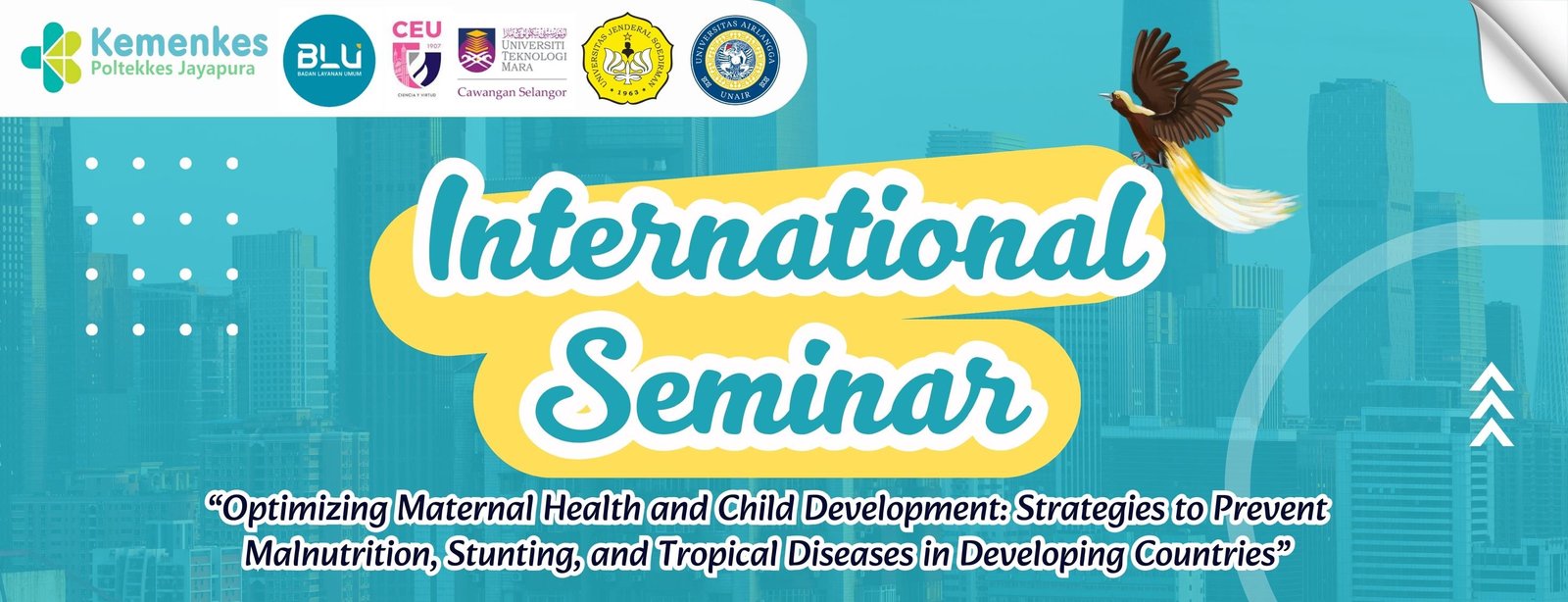
By organizing a seminar, Poltekkes Kemenkes Jayapura hopes to play a more active role in sharing effective strategies for optimizing maternal health and child development. By focusing on prevention and intervention, we can address malnutrition, stunting, and tropical diseases more effectively and promote sustainable development in developing countries. The theme of this international seminar is "Optimizing Maternal Health and Child Development: Strategies to Prevent Malnutrition,Stunting, And Tropical Diseases In Developing Countries".